


A sprint, a change of direction or a high kick, and suddenly a sharp pain in the back of your thigh. A hamstring strain is one of the most common injuries in football, basketball and running. Well-guided recovery decides how quickly you get back and whether the injury comes back.
In short
- A hamstring strain is one of the most common muscle injuries in sport.
- Exercises that strengthen the muscle in a lengthened position shorten recovery.
- The Nordic hamstring exercise cuts the number of injuries by up to half.
- A pop near the sitting bone, a large bruise and trouble walking need a doctor.
How common is a hamstring strain?
In professional footballers from 36 European clubs followed over 13 seasons, 22% of players had at least one hamstring injury each season. Injuries were nine times more frequent in matches than in training, and training injuries rose by 4% every year (Source: Ekstrand et al., BJSM, 2016).
Two types of strain
- Sprinting type: the most common, happens when running fast. Recovery is usually quicker.
- Stretching type: in dance, gymnastics or a high kick, when the muscle is stretched far. Recovery usually takes longer. In one study, return to sport took an average of 43 days for the stretching type and 23 days for the sprinting type (Source: Askling et al., BJSM, 2013).
What to do in the first days
- Protect the muscle for the first few days: no sprints, no hard stretching and no deep massage on the injured spot.
- Walk as much as you can without limping. Walking with a normal stride is a good sign.
- Start gentle loading, for example pressing your heel into the floor without moving (an isometric hold), as far as the pain allows.
Exercises that shorten recovery
In footballers with a hamstring injury, those who did exercises where the muscle works in a lengthened position returned in an average of 28 days, compared with 51 days for conventional exercises (Source: Askling et al., BJSM, 2013). Examples are a slow forward lunge with the back leg long, and the "aeroplane" (tipping forward on one leg).
How to prevent another strain
The best-researched prevention is the Nordic hamstring exercise: you kneel, someone holds your heels, and you slowly lower yourself forward. A review of studies found that programmes including the Nordic exercise cut hamstring injuries by up to 51% (Source: van Dyk et al., BJSM, 2019).
How you finish your recovery matters too. In one of the studies included in a review of risk factors, athletes who did agility and trunk stability exercises during rehab had 7.7% repeat injuries, compared with 70% for those who did strength and stretching exercises (Source: de Visser et al., BJSM, 2012).
When to go back to the pitch
- Hamstring strength is comparable to the other leg.
- Full-speed sprints and changes of direction don't hurt.
- You have completed a few full training sessions without problems.
When to see a doctor straight away
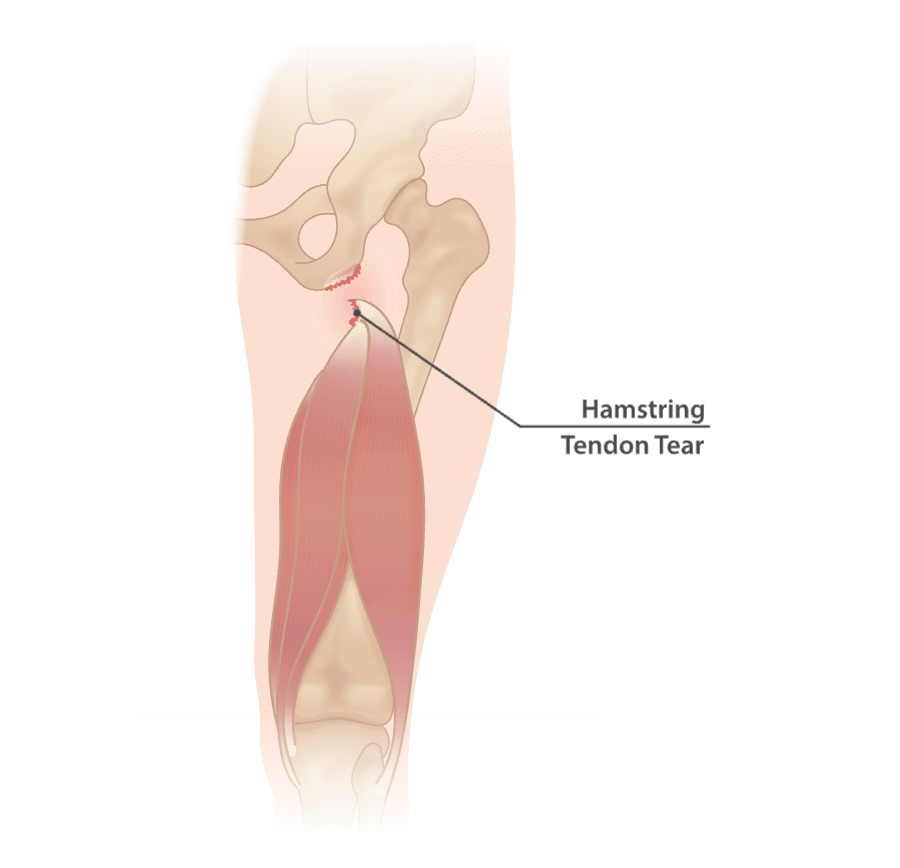
- See a doctor as soon as possible if you heard or felt a pop high up near the sitting bone, if a large bruise appeared, if walking is difficult, or if you can barely bend your knee against resistance. These can be signs of a tendon tearing off the bone, where a quick check by an orthopaedic surgeon matters.
How we help at Center ZATE
With experience from working with Slovenian national teams and clubs, we guide your recovery step by step: from the first release and gentle loading to sprints and strength testing before you return. We also help clubs with prevention programmes.
Has your hamstring stopped you mid-season? Book an assessment and together we'll plan a safe return.
Sources
- Ekstrand J et al. Hamstring injuries have increased by 4% annually in men’s professional football, since 2001. BJSM, 2016.
- Askling CM et al. Acute hamstring injuries in Swedish elite football: a prospective randomised controlled clinical trial. BJSM, 2013.
- van Dyk N et al. Including the Nordic hamstring exercise in injury prevention programmes halves the rate of hamstring injuries. BJSM, 2019.
- de Visser HM et al. Risk factors of recurrent hamstring injuries: a systematic review. BJSM, 2012.
This article is for information only and does not replace an examination by a doctor.
