


We all know the feeling when a hand "falls asleep". But if the tingling keeps coming back, wakes you at night or doesn't go away, it is worth finding out where it comes from. Often the cause is a nerve under pressure somewhere along its path from the neck to the fingers.
In short
- Brief tingling that passes within a few minutes is usually harmless.
- Which fingers tingle tells us which nerve is probably involved.
- The most common cause is carpal tunnel syndrome, which often flares up at night.
- A night splint and avoiding long periods with a bent wrist or elbow can help.
- Sudden numbness on one side of the body is an emergency: call 112.
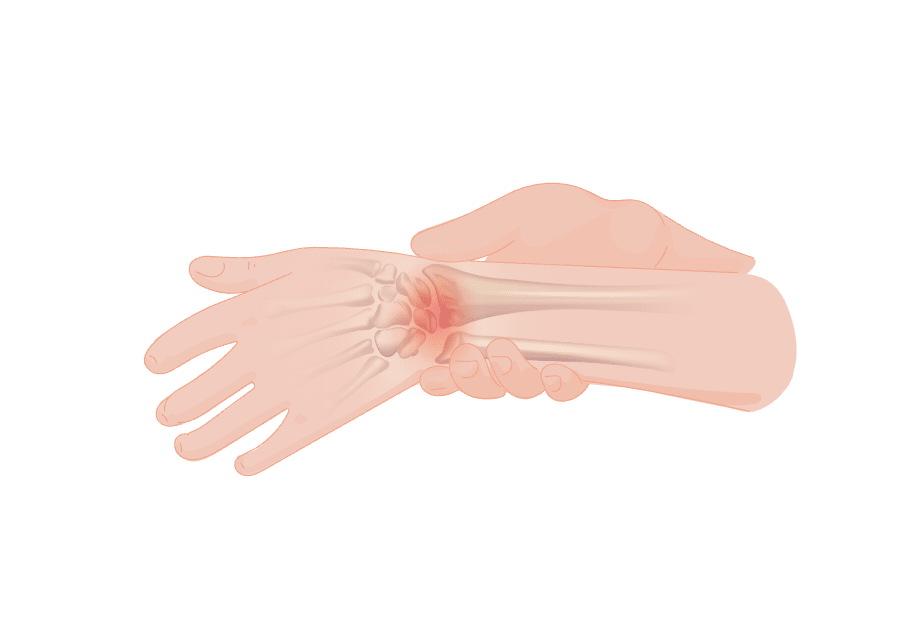
What your fingers tell you
- Thumb, index, middle finger and half of the ring finger: the median nerve at the wrist, most often carpal tunnel syndrome. It typically flares up at night or in the morning, and shaking your hand out helps.
- Little finger and half of the ring finger: the ulnar nerve, most often at the elbow. It often appears when you keep your elbow bent for a long time (phone calls, sleeping with a bent arm) or lean on it.
- Back of the hand near the thumb: the radial nerve, often after pressure on the upper arm, for example sleeping with your arm under your head or over the back of a chair.
- Pain from the neck spreading down the arm: this can be an irritated nerve in the neck. It often comes with pain in the neck or between the shoulder blades.
- Both hands and also the feet: the cause may be general rather than a trapped nerve. The most common cause of peripheral nerve damage is diabetes, and alcohol, some medicines and a poor diet can also play a part (Source: NHS). In this case, see a doctor first.
Carpal tunnel syndrome
In a large study of the general population, 14.4% of people reported pain, numbness or tingling in the area of the median nerve, and 3.8% had confirmed carpal tunnel syndrome. About one in five people with typical symptoms had carpal tunnel syndrome (Source: Atroshi et al., JAMA, 1999).
It is also common in pregnancy. Among pregnant women, 34% had symptoms, which got stronger after week 32 and were linked to fluid retention (Source: Meems et al., BJOG, 2015). If swelling is part of the picture, lymphatic drainage can also help.
Is the computer mouse to blame?
Surprisingly, a review of the research found not enough evidence that computer work causes carpal tunnel syndrome (Source: Thomsen et al., BMC Musculoskeletal Disorders, 2008). Even so, keeping your wrist bent for a long time can make symptoms worse, so breaks and a relaxed grip are worth it.
What you can do yourself
- A night splintthat keeps your wrist in a neutral position. People with carpal tunnel syndrome who used a night splint were more likely to improve than those who didn't, although the evidence is low quality (Source: Karjalainen et al., Cochrane, 2023).
- Don't sleep with a bent wrist or elbow. In mild cases of ulnar nerve compression at the elbow, people who were told which movements and positions to avoid had less discomfort (Source: Caliandro et al., Cochrane, 2016).
- Take breaks and change position when working with your hands, on the phone and when driving. Don't lean on your elbow for long.
- Gentle nerve gliding exercises can feel good, but research hasn't clearly shown that they work (Source: Page et al., Cochrane, 2012). Don't let them be your only solution.
You will find descriptions of nerve problems in the arm and exercises for home in the Where does it hurt? search under the Nerves view.
When to see a doctor straight away
- Call 112 (or your local emergency number)if you suddenly get numbness or weakness on one side of your body, a drooping corner of the mouth or trouble speaking. These can be signs of a stroke.
- See a doctor soon if you keep dropping things, notice the muscles at the base of your thumb getting thinner, the numbness is constant, both hands and feet tingle, your balance is off when walking, or the tingling started after a neck injury.
How we help at Center ZATE
We check the nerve's whole path, from the neck and shoulder to the elbow and wrist, because the cause isn't always where the tingling is. With manual care we release tight tissues around the nerve, and we give you exercises and tips for work and sleep. If you need further tests, such as a nerve conduction study, we refer you to a doctor.
Does the tingling keep coming back? Book an assessment so we can check the nerve's path and make a plan.
Sources
- NHS. Peripheral neuropathy.
- NHS. Pins and needles.
- Atroshi I et al. Prevalence of carpal tunnel syndrome in a general population. JAMA, 1999.
- Meems M et al. Prevalence, course and determinants of carpal tunnel syndrome symptoms during pregnancy. BJOG, 2015.
- Thomsen JF et al. Carpal tunnel syndrome and the use of computer mouse and keyboard: a systematic review. BMC Musculoskeletal Disorders, 2008.
- Karjalainen TV et al. Splinting for carpal tunnel syndrome. Cochrane, 2023.
- Caliandro P et al. Treatment for ulnar neuropathy at the elbow. Cochrane, 2016.
- Page MJ et al. Exercise and mobilisation interventions for carpal tunnel syndrome. Cochrane, 2012.
This article is for information only and does not replace an examination by a doctor.
